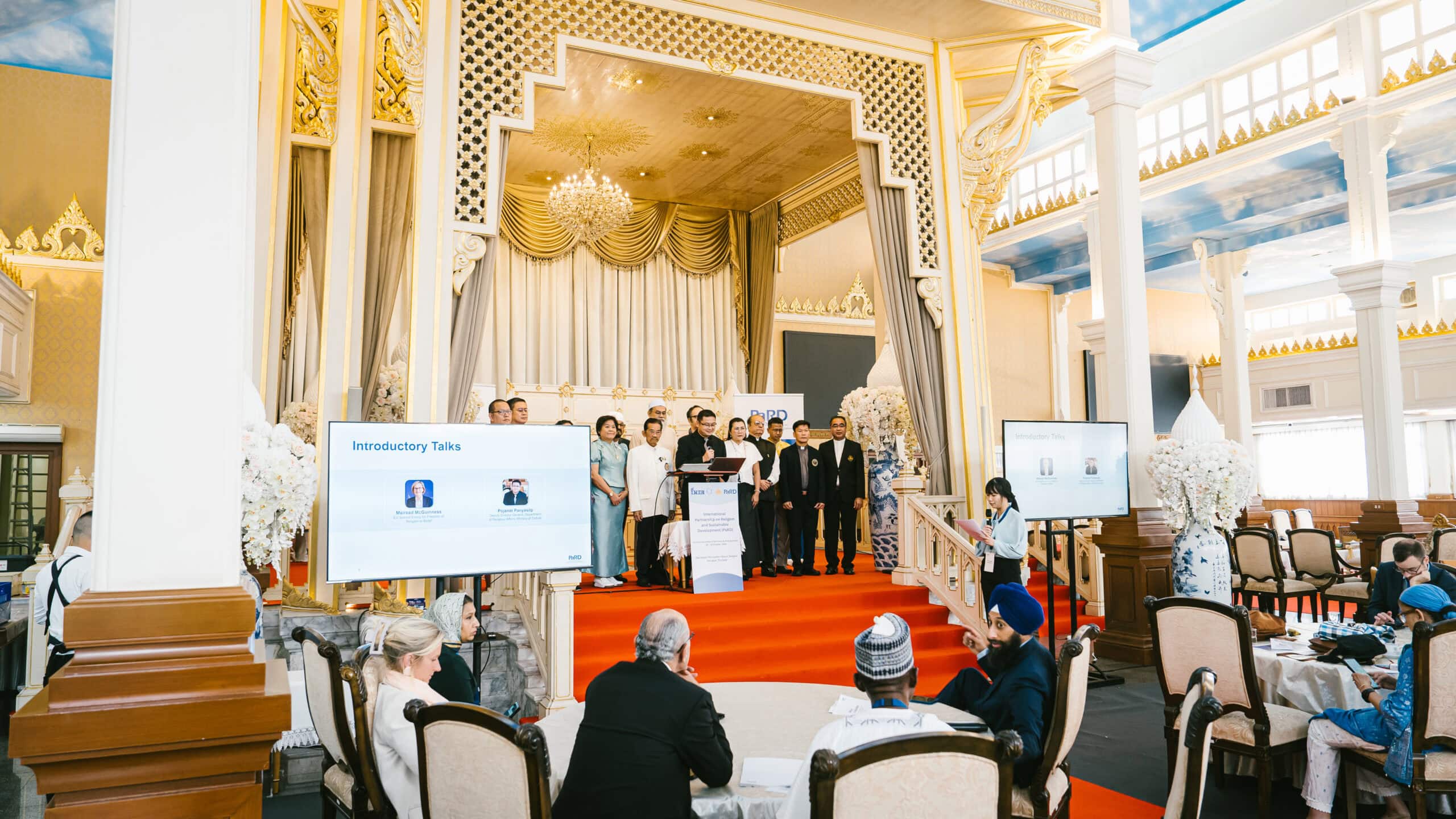
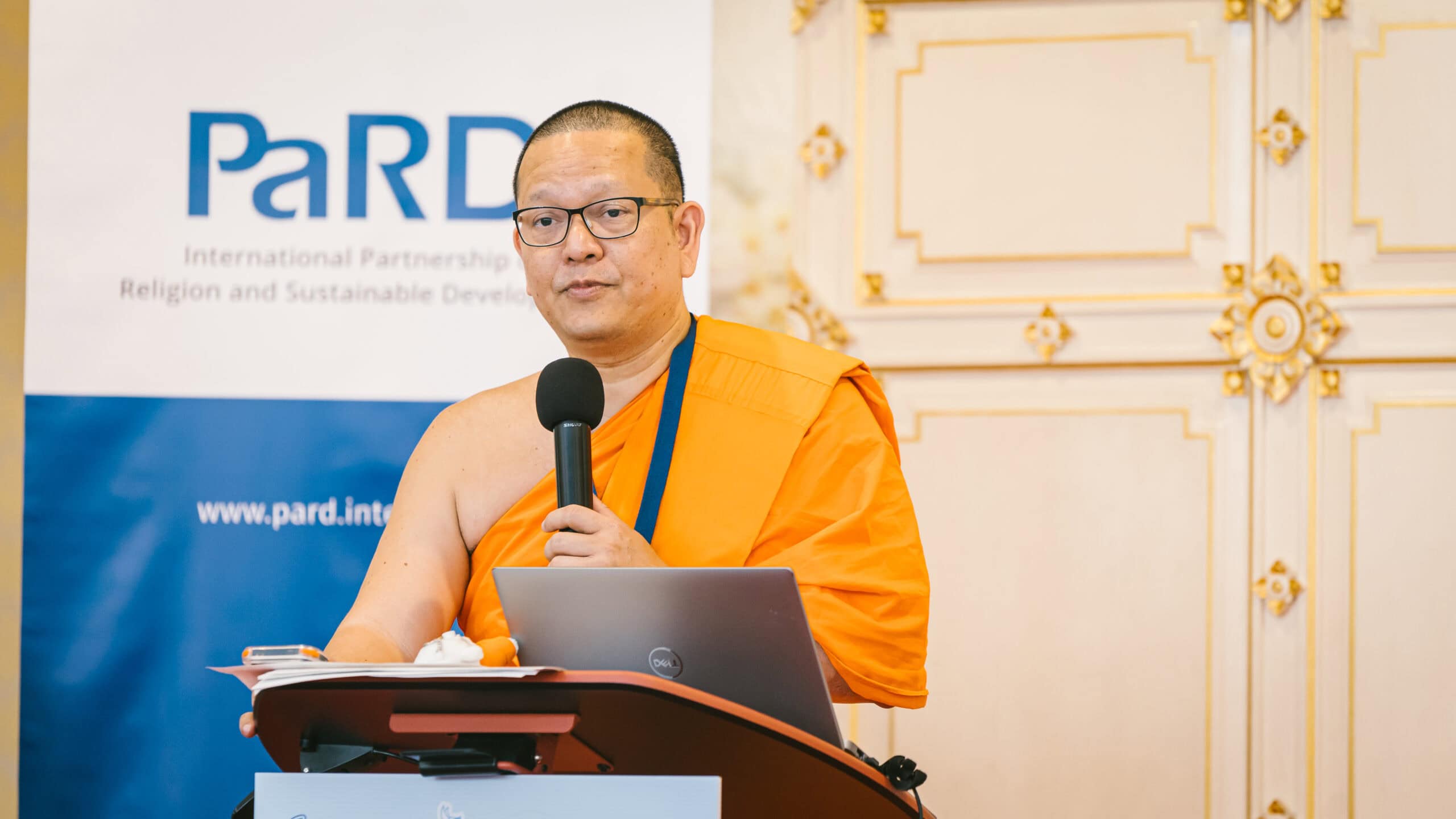
In his opening remarks at the Annual Forum on Religion and Sustainable Development 2025 in Istanbul, Khushwant Singh, the PaRD Head of Secretariat once again emphasized the role of religious actors and PaRD to act as bridges – between communities, traditions, constituencies, continents, and responsibilities.

Dear excellencies,
esteemed PaRD members and
partners both here in this room and online,
Selamün aleyküm, hoş geldiniz, welcome to Istanbul!
As you know, in Arabic culture, but also in Asian cultures people love stories. Also short stories. Allow me to begin with one: One day, Mullah Nasruddin attended a grand banquet in Istanbul wearing old clothes. He did not wear his turban. No one really noticed him. So he went back home, put on his turban and finest coat, brushed his beard, and returned. The moment he entered everyone greeted him with respect and offered him the best dishes. Mullah Nasruddin sat down and – instead of eating – dipped the sleeve of his coat into the soup, shouting: “Eat, my coat, eat! Clearly, it is you who is invited, not me.”
I leave it up to your wittiness to draw your conclusion from this story and its linkage to PaRD. One step to solve the riddle is to go back to what we discussed yesterday in the General Assembly of Members of our partnership. Stories of the so-called Orient are not so much about historical facts; they reveal timeless truths. They speak to the heart, not to the intellect. The tales of Mullah Nasruddin are one such example. He is said to have lived in Türkiye. There is even a tomb here and an annual festival in his honour. Some say he never existed, and believe his tales were inventions.
It is a truth that Istanbul is a city where continents, cultures, and religions meet. A city that has navigated conquest and empire, plague and prosperity, disruption and renewal. It stands today as a living metaphor for what we gather to achieve: bridging knowledge, traditions, perspectives, resources, and constituencies to confront the most pressing crises of our time. Just as this city has been a bridge between worlds, so too are we bridge builders. We are here to overcome silos, to dialogue and then move to action to enhance food security, justice, and well-being.
Istanbul teaches us many things. But two things are of especial importance: resilience and collaboration. Istanbul survived empires and pandemics. It has been home to diverse traditions. Take Galata – one of the oldest quarters in Istanbul. We might see a bit of it in the tour today in the evening. Catholic, Orthodox, Armenian, Jewish, Muslim and Sufi communities have been living there side by side. Churches, synagogues, mosques, and dervish lodges fill its narrow streets. Here, religious traditions have shared space, negotiated difference, and built civic life together. Dialogue is sometimes arduous, but it is worth the effort. The heritage of dialogue is what guides us in our annual forums.
Just yesterday, our FBO members demonstrated how dialogue can lead to solutions – even when views diverge, as in the nomination process for the Steering Board. Not everyone is happy. But the result is acceptable and has been accepted.
This deserves our applause!
Dialogue seems especially difficult these days. We live in turbulent and seemingly irreconcilable times. Bending the truth, spreading fake news and sowing hate are becoming normalised. Wars and massive violence rage from Gaza, Ukraine, Sudan, Congo, and Yemen to Myanmar, killing several hundred thousand people. Over 100 million people are displaced globally. All this has been fracturing families and communities and eroding basic human trust.
Global hunger, after decades of steady decline, is rising once again. According to the FAO – the Food and Agriculture Organization, over 920 million people today are undernourished. 920 million people. That is twice the population of the European Union. Meanwhile, in the EU alone, nearly 60 million tonnes of food are wasted annually – about 130 kilograms per person. The same abundance that creates waste can also feed the hungry, if guided by conscience and compassion.
Funding gaps further worsen the situation. For instance, since January 2025, 83% of USAID programs around the world have been terminated – with a combined value of nearly 76 billion US Dollars. We will come to this in the session with Professor Peter Mandaville. The latest progress report on the Sustainable Development Goals shows: we are far from achieving the UN 2030 Agenda. Only 16 percent of the SDG targets are on track. Zero Hunger, SDG 2? Only 13 percent progress since 2015. No Poverty, SDG 1? 17 percent. These numbers are not abstract. They represent everyday suffering. While armed conflicts dominate headlines, silent suffering often remains unnoticed – also that of nature. The environmental emergency quietly deepens. Every destroyed forest is a lost harvest of the future. Environmental degradation fuels food insecurity, displacement, and despair – yet receives shrinking attention and resources. Reclaiming our attention for Mother Earth and our fellow humans is an act of dignity, responsibility, and justice. This is precisely the time when faith-based voices, action and cooperation are needed the most.
Every conflict zone is also a hunger zone. Every destroyed field or displaced farmer represents not only loss of harvest, but loss of dignity. We can see this currently in the Panjab and adjacent regions in Asia. Mostly unnoticed by Western media, floods have devastated the fields of several hundred thousand famers, destroying houses and infrastructure. Especially religiously inspired people and civil society organisations were first responders and are the ones supporting the reconstruction process.
Once again, this vividly shows that religious actors are not bystanders. They do not only provide spiritual care, but also mobilize many volunteers and material resources. They deliver culturally sensitive interventions. They are anchors of resilience, capable of turning despair into hope, scarcity into sharing, and fragmentation into collaboration.
Sikhi emerged in the very region of Panjab where people are now suffering from floods. In Sikhi – a spiritual and wisdom-oriented way of living – food is more than sustenance. Food is a sacred expression of equality, humility, and connection. The tradition of the free communal meal offered in every Sikh community brings shared humanity and belonging to life. These meals are sacred not because of what is served, but because of the love with which they are prepared – and how they are shared. It is therefore no surprise that the largest free kitchen in the world is found in Panjab, serving tens of thousands of people every day, regardless of their background. Such traditions also remind us that nourishment is both physical and spiritual, and that eating together dissolves hierarchies of status and gender. Especially in times of crisis and fragmentation, such practices remind us that well-being and dignity never arise from greed but from compassion – and from the awareness that we are all part of one interconnected creation. This attitude is expressed in the word Langar. It means soul food (ਲੰਗਰੁ ਚਲੈ ਗੁਰ ਸਬਦਿ ਹਰਿ ਤੋਟਿ ਨ ਆਵੀ ਖਟੀਐ ॥ Guru Granth Sahib, 966). It represents the unconditional sharing of divine wisdom Gur Sabad that nourishes our inner being. Langar, in this sense, is spiritual guidance for a dignified and humble lifestyle. So hunger is not only a matter of calories – it is a symptom of broken human values and relationships: with the earth, with each other, and with the Divine.
PaRD taps into the vast potential of religious actors. Yesterday, PaRD members proposed concrete ways to work across sectors and constituencies to contribute to food security, our current flagship topic. And in the leadership meeting on Thursday, we will further discuss how to adjust our working modalities. Because we want to be even more relevant in a world of turmoil.
Let us be strategic and far-sighted about the priorities we want to set. And let us also have the courage to open up to topics that might to seem distant at first glance – like Artificial Intelligence. We will have a fascinating session on this tomorrow. For the first time ever, PaRD is hosting a panel on Religion and Artificial Intelligence. And let me assure you, this speech was not written by AI. I used AI to correct mistakes as I am not a native speaker.
Let us co-create solutions and find actionable recommendations for every key topic we will discuss. Whether it is about safeguarding knowledge, human rights, peace, traditional religion as a resource for ecological preservation, or mental health. PaRD is an alliance of people of good will. PaRD is an inclusive space where every act of collaboration contributes to a far-sighted, holistic vision of well-being. Together, we are bridges – between communities, traditions, constituencies, continents, and responsibilities. And in 2026 we will celebrate our 10-year jubilee and highlight the various contributions that have been made in the last years.
Pardies – as we call people from our partnership – are people of hope and resilience! Pardies are concerned with quality, not quantity. I have been witnessing this for many years now. Especially in times of crisis. We are challenged in PaRD. We are facing dwindling interest in our topics among governments. We lost highly dedicated experts in PaRD because their organisations could not extend their contracts due to funding cuts. Yet their moral support is with us. And our hope is with them. Let us convey our acknowledgement for all these colleagues. Let us send our collective hope to them in this moment. Let us not forget – every crisis carries the seed of renewal. We all have experienced this in our personal lives.
You will most probably not be surprised that Mullah Nasruddin will close my remarks. Once, Mullah was searching for his lost keys under a streetlamp. A lady came and started helping him. After half an hour she said: “Are you sure you lost your key here?” Mullah Nasruddin replied, surprised, “Of course I did not lose them here.” The lady was astonished and asked: “Then why are you searching here?” Mullah, with his usual innocent face expression, responded: “Because the light is better here.”
I would like to thank everyone who helped making this gathering possible: the hotel staff, the technicians, Dr. Berthold Weig from BMZ for providing core funding and ongoing support, PaRD members for their engagement and substantial in-kind contributions, our rapporteurs and photographer Maurice Weiss, and of course our team from the PaRD Secretariat who is doing a great job. This applause is for all of you.
I wish us all a great event. Days filled with concrete ideas, shared hope, and a sense that our spirits are woven together in purpose!
Thank you!
Teşekkür ederim!