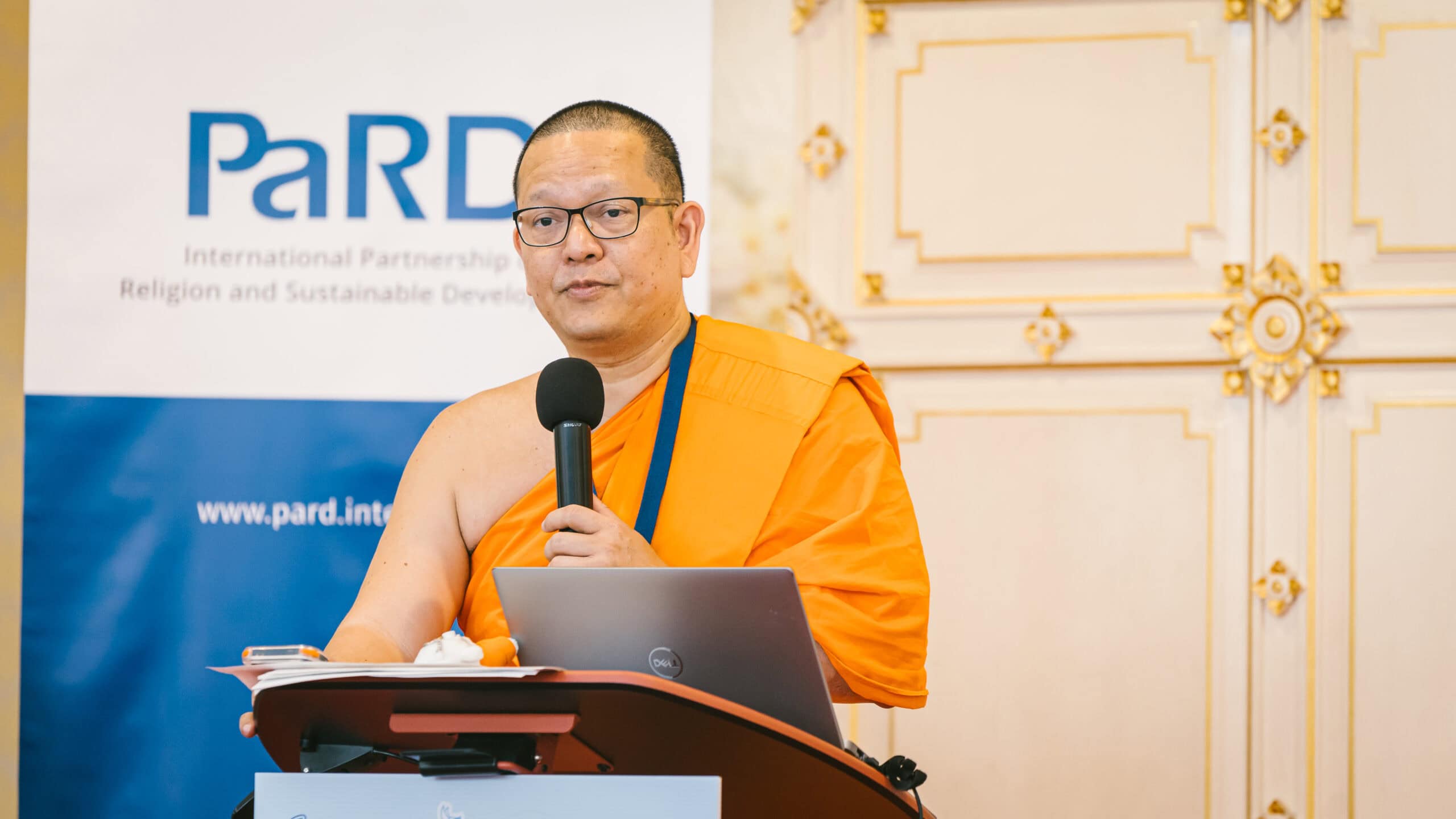
In his address to the PaRD Annual Forum 2025, Prof. Dr. Phil. H. Kamaruddin Amin, Secretary General of the Ministry of Religious Affairs of the Republic of Indonesia, highlighted the vital intersection between food security and religion — emphasizing the ethical, social, and spiritual dimensions that underpin inclusive and sustainable food systems.

Assalamu’alaikum warahmatullahi wabarakatuh
Excellencies,
Dear PaRD colleagues,
Ladies and gentlements,
It is a great honor and privilege for me, on behalf of the Ministry of Religious Affairs of the Republic of Indonesia, to address this important gathering of the PaRD Annual Forum 2025. I am very sorry that I cannot be with you in person, that urgent government matters prevented me from visiting the beautiful city of Istanbul together with you.
Today’s topic, “Food Security and the Role of Religion: The Indonesian Experience”, is not only timely but also highly relevant. In our interconnected world, ensuring that every person has access to safe, sufficient, and nutritious food is both a humanitarian and a spiritual responsibility. Religion, in this regard, plays a profound role — not only as a set of rituals or beliefs, but as a source of ethical guidance, communal solidarity, and concrete policy frameworks.
Allow me to begin with a brief portrait of Indonesia. Indonesia is a vast country, consisting of more than 17,000 islands, stretching across two continents and three time zones. With more than 280 million people, we are the world’s fourth most populous nation. Indonesia is widely recognized as the country with the largest Muslim population in the world. However, we are not only a Muslim nation – we are a multi-religious and multi-ethnic nation.
Our Constitution guarantees freedom of religion, and the state provides services for all six officially recognized religions: Islam, Protestantism, Catholicism, Hinduism, Buddhism and Confucianism. In addition, Indonesia is home to hundreds of local beliefs and indigenous traditions. This multireligious and multicultural identity is the foundation of our national motto: Bhinneka Tunggal Ika, or Unity in Diversity. In practice, this means that when we speak about food security and religion, we are speaking not only from a Muslim perspective, but also from the perspective of other communities. The state must ensure that food security policies are inclusive, respecting the diversity of dietary laws and ethical concerns of all faiths.
From the perspective of Islam, the religion of the majority, food security has a very direct connection to the concept of halal and tayyib. The Qur’an commands Muslims to consume only what is halal (permissible) and tayyib (good, wholesome, and beneficial). The verse “halalan tayyiban” is repeated several times in the Qur’an, emphasizing that consumption is not merely a matter of physical survival, but also of spiritual integrity and moral responsibility. This dual command — halal and tayyib — is deeply aligned with the modern understandings of food security. Food must not only be available in sufficient quantity; it must also be safe, nutritious, and ethically produced. In this way, religion reinforces universal principles of public health, environmental sustainability, and human dignity.
Indonesia recognizes food security as a fundamental right of every citizen. The government therefore invests heavily in policies that ensure:
1. Availability of food through domestic production and responsible imports.
2. Accessibility, meaning that food must be economically and physically reachable by all, including the poor and marginalized.
3. Utilization, ensuring that food is nutritious, safe, and culturally appropriate.
4. Stability, guaranteeing that food supply is resilient to crises such as climate change, pandemics, and geopolitical disruptions.
Religion, in this context, provides not only the moral imperative but also the social infrastructure to realize these goals. Religious communities are often at the forefront of food distribution, charity, and social solidarity during times of crisis — whether natural disasters, economic hardship, or health emergencies. In today’s globalized economy, halal is not only a domestic concern but also a critical issue in international trade. Indonesia both imports and exports a wide range of products. For halal goods, we have developed Mutual Recognition Agreements (MRAs) with several partner countries. Under these agreements, a product certified halal in one country can be recognized as halal in Indonesia, and vice versa. This mechanism reduces trade barriers, fosters trust between nations, and ensures that Muslim consumers around the world can access halal products with confidence.
Beyond halal certification, religion also contributes to food security in broader ways:
1. Ethical Consumption. Many religions teach moderation, gratitude, and the avoidance of waste. In Islam, wasting food is considered sinful. Similar values are found in Christianity, Hinduism, Buddhism, and other traditions.
2. Charity and Solidarity. Religious practices such as zakat, sedekah, and infaq in Islam, or dana in Buddhism, play an essential role in providing food for the poor and vulnerable.
3. Community Mobilization. Religious institutions such as mosques, churches, temples, and monasteries serve as distribution centers during crises. For example, during the COVID-19 pandemic, these religious spaces became hubs for food aid and social support.
4. Sustainability and Stewardship. Many religious teachings emphasize the care for creation, the protection of nature, and the ethical use of resources. These values are essential in building long-term sustainable food systems.
As we gather at this PaRD Annual Forum, let us remember that food security is not only a technical issue of agriculture, trade, and logistics. It is also a spiritual and moral issue. Religion provides the ethical compass, the communal solidarity, and the moral energy to ensure that no one is left hungry. Our topic today is highly relevant. The role of religion in food security is highly significant. The partnership is essential to amplify the role of religion in addressing current global challenges. At this point, the existence of PaRD is crucial.
• PaRD as a multistakeholder partnership has created real added value for our work.
• It has given us a platform to connect with faith-based organisations, academic institutions, multilateral organizations and governments.
• It has created safe spaces for dialogue.
• It has shown that religion can play a constructive role in development and peacebuilding.
• This partnership has deepened our understanding of how shared values across institutions and sectors can strengthen public policy.
Looking ahead, Asia will be central to our joint efforts. The region is home to diverse religious traditions. It faces pressing challenges in food security, climate resilience, and social justice. We believe PaRD Asia can become a localized platform bringing together governments, civil society, and faith actors. Our ministry stands ready to support this vision. We invite more Asian – and also other – governments from around the world to join this meaningful partnership. You might not see the value of it when you just read about it on paper. But once you join an Annual Forum in person or work together with the experts who lead PaRD’s core activities and the PaRD Secretariat, you understand its value very well. Only together we can build strong partnerships and deliver real impact. Distinguished participants, ladies and gentlements, dear PaRD colleagues, this forum is a chance to renew our commitment and plan concrete action. Let us act together – with wisdom, with compassion, and with courage.
Thank you very much.
Wassalamu’alaikum warahmatullahi wabarakatuh
Jakarta, October 2025