Learn more about PaRD’s General Assembly of Members and Annual Forum on Religion and Sustainable Development 2025, in Istanbul, Türkiye.

A Global Gathering for Transformative Action
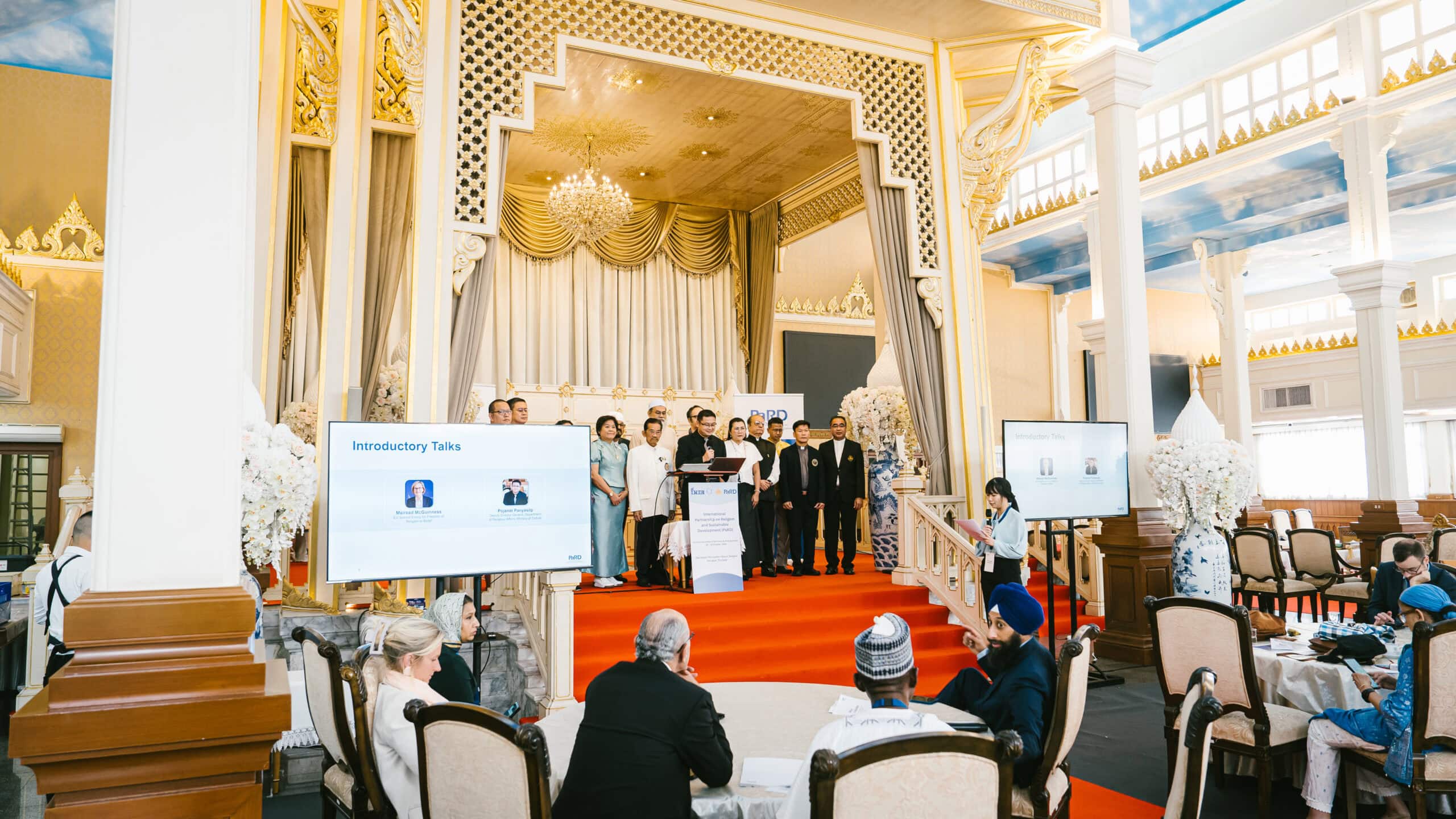
Amid intensifying geopolitical tensions, shrinking civic space, rising authoritarianism, climate-induced crises, increasing depts, and mounting financial constraints, the global development cooperation sector is undergoing a profound transformation. Against this complex backdrop, the 2025 PaRD Annual Forum in Istanbul brought together faith-based and secular actors from around the world to exchange perspectives, strengthen mutual understanding, and reflect on PaRD’s collective journey.
The Forum successfully fulfilled its overarching purpose – to serve as a space for exchange, trust-building, and forward-looking reflection at a time when collaborative action is needed more than ever. Throughout the sessions and discussions, participants explored how faith-inspired initiatives are contributing to resilience, justice, and transformative change in diverse regions and contexts that shape global affairs. A central focus of the Annual Forum was fostering mutual understanding across sectors and traditions. By creating common ground for ethical leadership and values-driven dialogue, PaRD members and partners demonstrated how inclusive cooperation can endure despite political, social, and funding-related disruptions.
At the same time, the gathering served as an important moment of introspection for the network. As PaRD approaches its 10th jubilee in 2026, participants reflected on its collective journey – reassessing the network’s structure, relevance, and way of working while identifying concrete pathways for deeper engagement and renewed strategic direction. With these outcomes, the 2025 Annual Forum laid a solid foundation for PaRD’s next chapter. Building on the insights, commitments, and collaborative spirit that emerged in Istanbul, PaRD now enters a crucial phase of evolution – one aimed at strengthening its relevance, structure, and impact in the years ahead.
Calls for Collective Action and Hope in Times of Crisis
The Annual Forum opened with PaRD’s General Assembly of Members (GAM) on 6 October, providing a space for reflection, decision-making, and internal governance. The subsequent sessions on 7–8 October expanded the dialogue to external experts and partners, offering a platform for joint reflection on today’s most pressing global issues.
Opening the General Assembly of Members, Andreia Henriques, member of the outgoing Steering Board and External Relations and Partnership Adviser at the King Abdullah bin Abdulaziz International Centre for Interreligious and Intercultural Dialogue (KAICIID), emphasised how PaRD is in the unique position to unlock the potential of collaboration between grassroots organisations, global advocacy FBOs, governments, religious leaders, multilaterals, universities, and many others. Expressing gratitude to the BMZ, the Indonesian Government, and the PaRD Secretariat for their ongoing support, she concluded that PaRD offers this unique safe space for dialogue because “there is space for all in PaRD”.
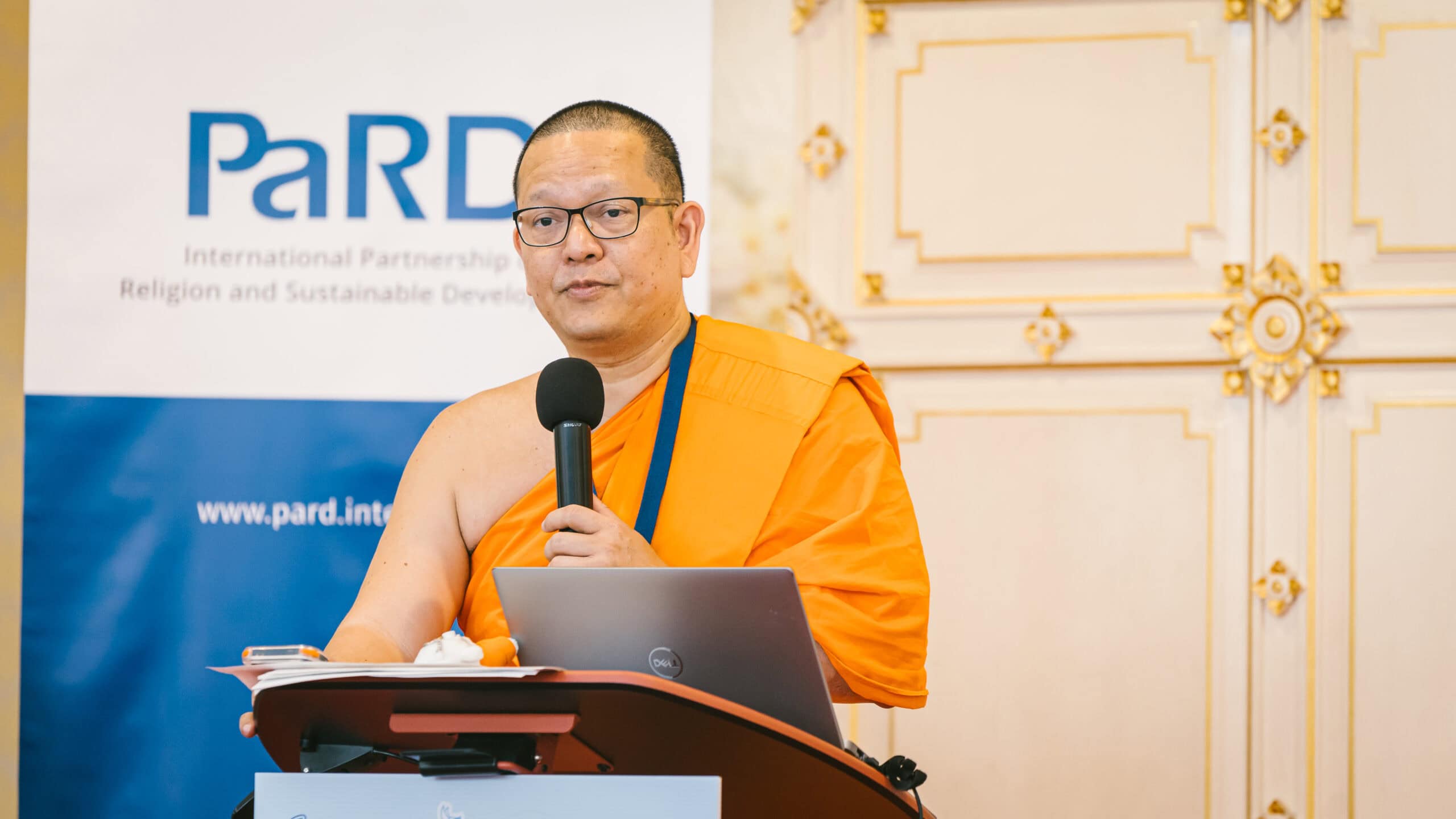
Around 80 members and high-level panellists attended and spoke at the PaRD Annual Forum. Opening the Annual Forum, Khushwant Singh, Head of the PaRD Secretariat, reminded participants that while armed conflicts dominate headlines, the environmental emergency quietly deepens, and yet these issues – along with food insecurity, displacement, and despair – receive decreasing attention and resources. He emphasised that “this is precisely the time when religious voices, action, and cooperation are needed the most”.
A central theme of the Annual Forum was that food insecurity, justice, and well-being affect us all, especially in today’s time of multifaceted global crises. Dr. Berthold Weig, Deputy Director of the Division Cooperation Churches and Religion at the German Federal Ministry for Economic Cooperation and Development (BMZ), stressed that only through cooperation with religious and faith actors can societies face those turbulent times, and emphasised the important role of the partnership with its multi-stakeholder approach, especially in times of rising unilateralism.
Professor Dr. Phil. Kamaruddin Amin, State Secretary at the Ministry of Religious Affairs of Indonesia, explained that food security is not only a technical issue of agriculture, trade, and logistics but a spiritual and moral one. Religion, he said, “provides the ethical compass, the communal solidarity, and the moral energy to ensure that no one is left hungry”. He called on participants to see the Annual Forum as a chance to renew PaRD’s commitment, plan concrete action, and to “act together – with wisdom, with compassion, and with courage.”
The uniting topic of the opening remarks was the importance of acting and standing together in difficult times. Dr. Iyad Abumoghli, Founder and Director of UNEP’s Faith for Earth Coalition, gave a powerful call for unity among faith actors, policymakers, and scientists to translate their moral and technical strengths into environmental action: “The Earth is crying. Science is clear. Faith is strong. The conscience is ready. Now is the time — not for words, but for deeds.”
Moral Courage and Shared Responsibility
Valued PaRD members such as the KAICIID, ACT Alliance, and others shared their insights on combating food insecurity and fostering resilience, trust, and cooperation. Despite the difficult global context, speakers underlined the importance of not losing hope.
Professor Cesare Zucconi, representing the Community of Sant’Egidio, said: “The world needs signs of hope. It is too easy to fall into cynicism, to believe that conflict is inevitable, that religions will always divide.” And, perhaps most importantly, Professor Zucconi reminded the audience that “peace is always possible”.
PaRD’s role in these turbulent times remains crucial. Peter Prove, Director of the Commission of the Churches on International Affairs at the World Council of Churches, reminded the audience of the potential every crisis holds: “Every crisis is also an opportunity. This is a moment for a reset and to reassess our own preconceptions about PaRD – to be an active agent and leader in the context of crisis and the challenges and opportunities that crises present. Let’s not waste a perfectly good crisis!”
Shahin Ashraf of Islamic Relief Worldwide emphasised that PaRD’s true value lies in fostering meaningful relationships and long-term collaboration. She urged that “this is a moment to reimagine what PaRD will be. The world is shifting fast, and we need to ask ourselves, how do we as people of faith and conviction adapt to an environment where fear and division are growing but where solidarity and hope are so needed”.

The final day of the Annual Forum 2025 was opened by diplomat Luca Fratini, Coordinator for Women, Peace, and Security (WPS) and Youth, Peace, and Security (YPS), and Mediation Policies at the Ministry of Foreign Affairs and International Cooperation of Italy; Ambassador Pasquale Ferrara, President of the “Reset Dialogues on Civilizations” think tank, former Director-General for Political Affairs and Security of Italy; and Ambassador António de Almeida Ribeiro, Acting Secretary-General of the PaRD member “The International Dialogue Centre KAICIID”. Together, they underscored the importance of multilateral dialogue and inclusion in a time of unprecedented conflicts worldwide. They highlighted that women, youth, Indigenous communities, and other marginalised groups must be seen as active peacebuilders and agents of security. Diplomacy needs to be adapted to contemporary realities. And for that, Ambassador Ferrara emphasised, “Our century demands more than optimism — it demands moral courage,” because, as diplomat Luca Fratini stated: “Without dialogue there is no peace, without trust there is no mediation, and without inclusivity there is no legitimacy.” Ambassador Ferrara concluded that “the challenge is not only to feed humanity, but to redefine how humanity lives on Earth. The planet is not our possession, but our partner.”
Election of PaRD’s New Steering Board
During the Annual Forum 2025, the outgoing Steering Board concluded its term and welcomed the newly elected members for the period from 2025 to 2027. The session focused on identifying possible strategic and thematic priorities for the year ahead. The new Steering Board will represent the four constituencies of PaRD.
Representing multilateral organisations, Ambassador Amr Aljowaily, Director of the African Union Citizens and Diaspora Directorate (CIDO) based in Addis Ababa, Ethiopia, newly joined the Board. William Carew from AU ECOSOCC will continue his term.
Representing academic institutions, Cosmo Mapitsa from Humboldt University Berlin, a South African legal scholar and researcher specialising in law, religion, and sustainable development, was elected.
Representing governmental entities, Dr. Berthold Weig, Deputy Director of the Division Cooperation Churches and Religion at the German Federal Ministry for Economic Cooperation and Development (BMZ), continues his mandate. Nuria Isna Asyar, Special Staff for International Affairs at the Directorate-General of Islamic Community Guidance at the Indonesian Ministry of Religious Affairs, continues in her capacity as PaRD Co-Chair.
Representing faith-based and civil society organisations, Carolin Hillenbrand, founder of the FBO “Coexister Germany e.V.”, an interfaith youth movement promoting dialogue, civic engagement, and peaceful coexistence, was newly elected. Also elected were Denise Kodhe from the Institute for Development & Leadership in Africa (IDEA), as well as Hira Aftab from “A Common World Among the Youth” (ACWAY).

Shahin Ashraf, Head of Global Advocacy and Research at Islamic Relief Worldwide, was also welcomed as a new Steering Board member. Further representing FBOs/CSOs in the new Steering Board is Eleonora Mura from Arigatou International. At Arigatou International, she is responsible for Partnerships and Resource Mobilisation.

Continuing his term for the FBOs/CSOs will be Peter Prove, Director at the World Council of Churches, further providing his expertise from almost two decades of experience in the international policy arena. Also continuing in his capacity will be Stefan Sengstmann, Director of the Technical Advisory Group at World Vision Germany, bringing expertise from over 15 years in development cooperation, including roles in HIV/AIDS programming and capacity building.

About PaRD
The International Partnership on Religion and Sustainable Development (PaRD) was founded in 2016 with only 12 members. It has since grown into a partnership bringing together religious and other civil society actors, government entities, multilateral organisations, and academic institutions. To learn more about how these stakeholders work together, visit PaRD’s Knowledge Centre.
The Annual Forum on Religion and Sustainable Development is coordinated by PaRD’s Secretariat, which supports members in implementing PaRD’s mission. The Secretariat is hosted by the sector project “Religion and Sustainable Development”, implemented by the German Agency for International Cooperation (GIZ) on behalf of the German Ministry for Economic Cooperation and Development (BMZ). The Ministry provides core funding for the Secretariat and key activities such as the Annual Forums, leadership meetings, and workstream activities. PaRD also receives substantial in-kind contributions from its members, valued at several hundred thousand euros annually.
PaRD’s Annual Forum serves as a co-creative space for knowledge sharing, collaboration, and the development of actionable recommendations to amplify contributions by religious actors to the Sustainable Development Goals (SDGs) and increase their global visibility. It acknowledges inclusive efforts of stakeholders across key sectors and their ability to leverage their unique strengths and resources in a complementary way to contribute to sustainable development.
Istanbul, with its rich history as a bridge between East and West, faiths, and cultures, provided a symbolic and strategic background as a meeting point of continents, civilisations, and ideas. In this moment of global reckoning, Istanbul became a space for convergence and renewal – of commitments, partnerships, and visions for the future.