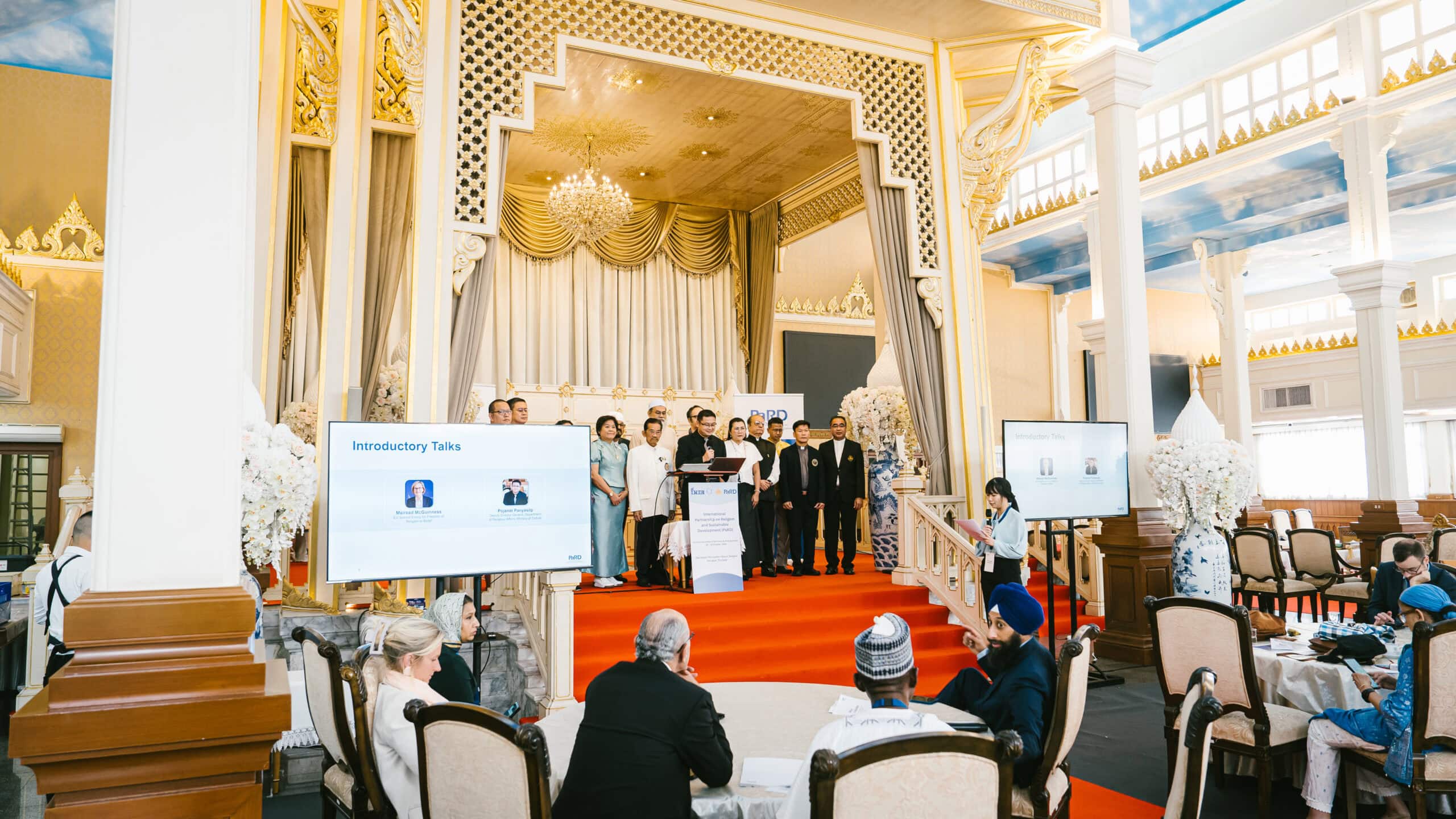
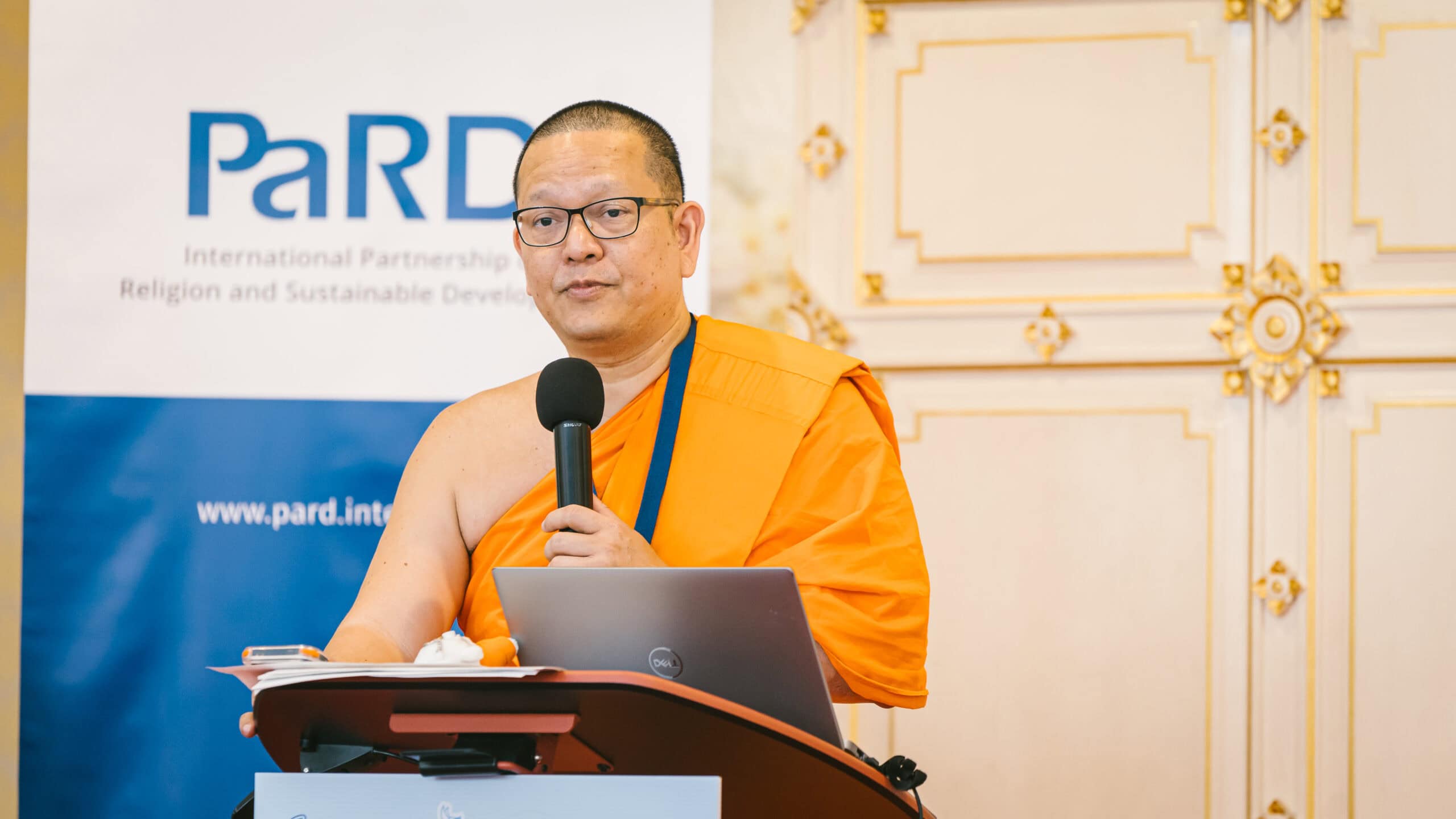
The 2025 General Assembly of Members (GAM) brought together PaRD’s global membership for a full day of dialogue, exchange, and strategic reflection. Held in Istanbul, the GAM opened this year’s Annual Forum on Religion and Sustainable Development (6–8 October 2025), setting the tone for three days of collaboration and inspiration.

A Global Gathering for Transformative Action
The day began with words of welcome from Andreia Henriques (KAICIID, Portugal), Hira Aftab (ACWAY, UK), and Dr. Berthold Weig (BMZ, Germany), following a moment of silence.
“We all know: this is not an easy time. The global context is difficult. Priorities are changing. Resources are shifting. Too many people face wars and conflicts, shrinking civic space, authoritarian governments, hunger, poverty, and many forms of injustice. One option is to end our partnership, because no one else is co-financing PaRD. The other option is to continue – precisely because no one else is co-financing. We choose the second.
– Dr. Berthold Weig (BMZ) during the opening remarks
Following an icebreaker session, Monika Kirchmann and Peter Noack from the PaRD Secretariat presented the Annual Report to Members, reviewing achievements, challenges, and priorities throughout the last year. Members engaged actively in discussions around membership development, coordination structures, and the network’s in-kind contribution system.
After a networking break, the late morning focused on the presentation of the new Steering Board, moderated by Stefan Sengstmann (World Vision Germany). Members of the faith-based organisations’ (FBOs) constituency were able to discuss open questions and concerns about the nomination process in a safe space. Through lively dialogue, a consensus was reached on the nominated candidates while reaffirming the importance of transparency and shared ownership within the partnership.
Afterwards, the new nominees from all constituencies – government entities, multilateral organisaitons, academic institutions and FBOs – introduced themselves to the assembled membership and were officially acclaimed. The new PaRD Steering Board includes Ambassador Amr Aljowaily from the African Union Citizens and Diaspora Directorate (CIDO) and William Carew from AU ECOSOCC. Representing academia, Cosmo Mapitsa joins from Humboldt University Berlin. From governmental entities, Dr. Berthold Weig of the German Federal Ministry for Economic Cooperation and Development (BMZ) and Nuria Isna Asyar of the Indonesian Ministry of Religious Affairs continue their mandates. Representing faith-based and civil society organisations, the newly elected members are Carolin Hillenbrand from Coexister Germany e.V., Denise Kodhe from the Institute for Development & Leadership in Africa (IDEA), Hira Aftab from A Common World Among the Youth (ACWAY), Shahin Ashraf from Islamic Relief Worldwide, and Eleonora Mura from Arigatou International. Continuing their terms are Peter Prove from the World Council of Churches and Stefan Sengstmann from World Vision Germany.
Following lunch, Eleonora Mura (Arigatou International) moderated the session on “The Flagship and Future Possibilities of Participation”, exploring how members can meaningfully engage in the Flagship Initiative on Food Security and link it with PaRD’s other workstreams. In group discussions, participants addressed three key dimensions of food security – production, consumption, and distribution:
- Food production: Emphasis was placed on promoting local and traditional foods, organic farming, and climate-resilient agriculture. Participants proposed a roundtable on climate change and food sovereignty and highlighted the need to examine the gender–food production nexus.
- Food consumption: Discussions focused on ensuring food sovereignty, equitable access, and dignity in food consumption, as well as eliminating violence and discrimination. Participants also stressed the importance of identifying and bridging existing policy gaps.
- Food distribution: Recommendations included minimizing food waste, building the capacity of food actors in preservation techniques, and respecting cultural contexts during humanitarian responses. Participants underscored the need to avoid distributing expired food and to treat recipients with dignity. They also suggested innovative outreach through podcasts, messaging, and religious advocacy.
The day ended with a concluding plenary moderated by Peter Noack, reflecting on PaRD’s working modalities and envisioning more flexible collaboration formats to strengthen ownership, coordination, and impact.
Reflections and Priorities
Members agreed that engagement across PaRD’s workstreams has been uneven. To revitalise participation, they proposed regionally and thematically anchored initiatives and improved communication between focal points, regional clusters, and the Secretariat. Chat groups and regular briefings were suggested to keep collaboration dynamic and responsive.
Participants underscored that PaRD’s strength lies in being more than a project consortium – it is a long-term, trusted platform connecting faith- ased, governmental, multilateral, and academic members around shared ethical values and social capital. Clear articulation of this identity will help maintain focus and coherence across the network.
The Assembly reaffirmed its commitment to the current flagship initiative on food security while calling for stronger coordination and resource management. Members highlighted the need for regional clustering – such as PaRD Africa and Asia – to enhance localisation and contextual relevance, ensuring that activities are both globally aligned and locally owned. PaRD Africa and Asia set up chat groups right after the session to improve the flow of communication.
There was broad agreement that PaRD should diversify its membership to include more academic, governmental, and multilateral actors, while continuing to anchor its work in faith-based engagement. One priority topic identified was youth inclusion. Members also favoured focusing on quality over quantity, supported by clear membership criteria which ensure that members can create an added value within and for PaRD and accountability mechanisms.
Looking ahead
The closing plenary reaffirmed that PaRD’s strength lies in its diversity and shared values. Members expressed renewed commitment to collaboration, innovation, and results-oriented engagement. As PaRD enters its 10-year jubilee, the discussions in Istanbul made it clear that PaRD is ready to evolve and transform to meet future challenges – and the foundation for this transformation was laid at the General Assembly of Members 2025.