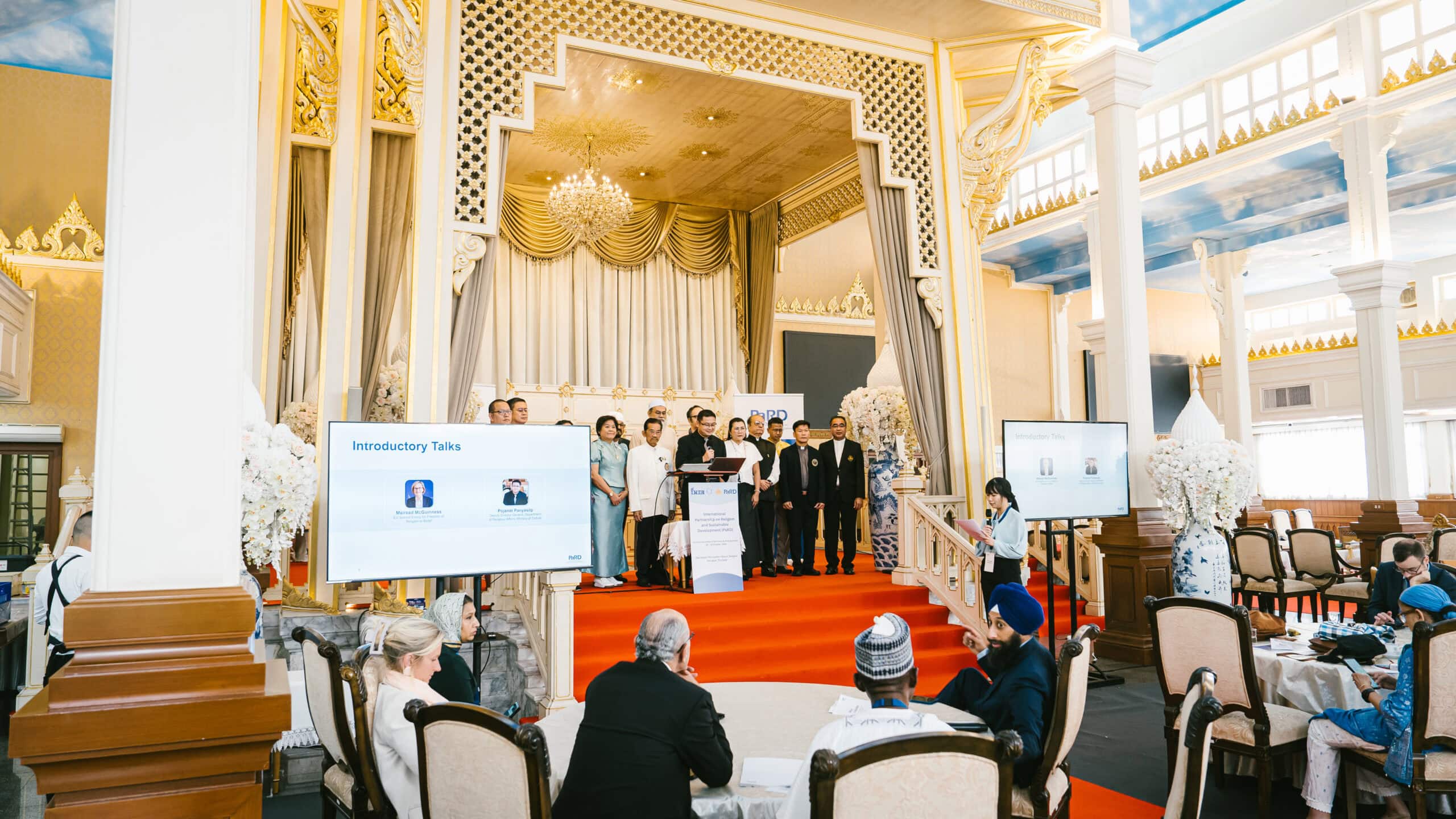
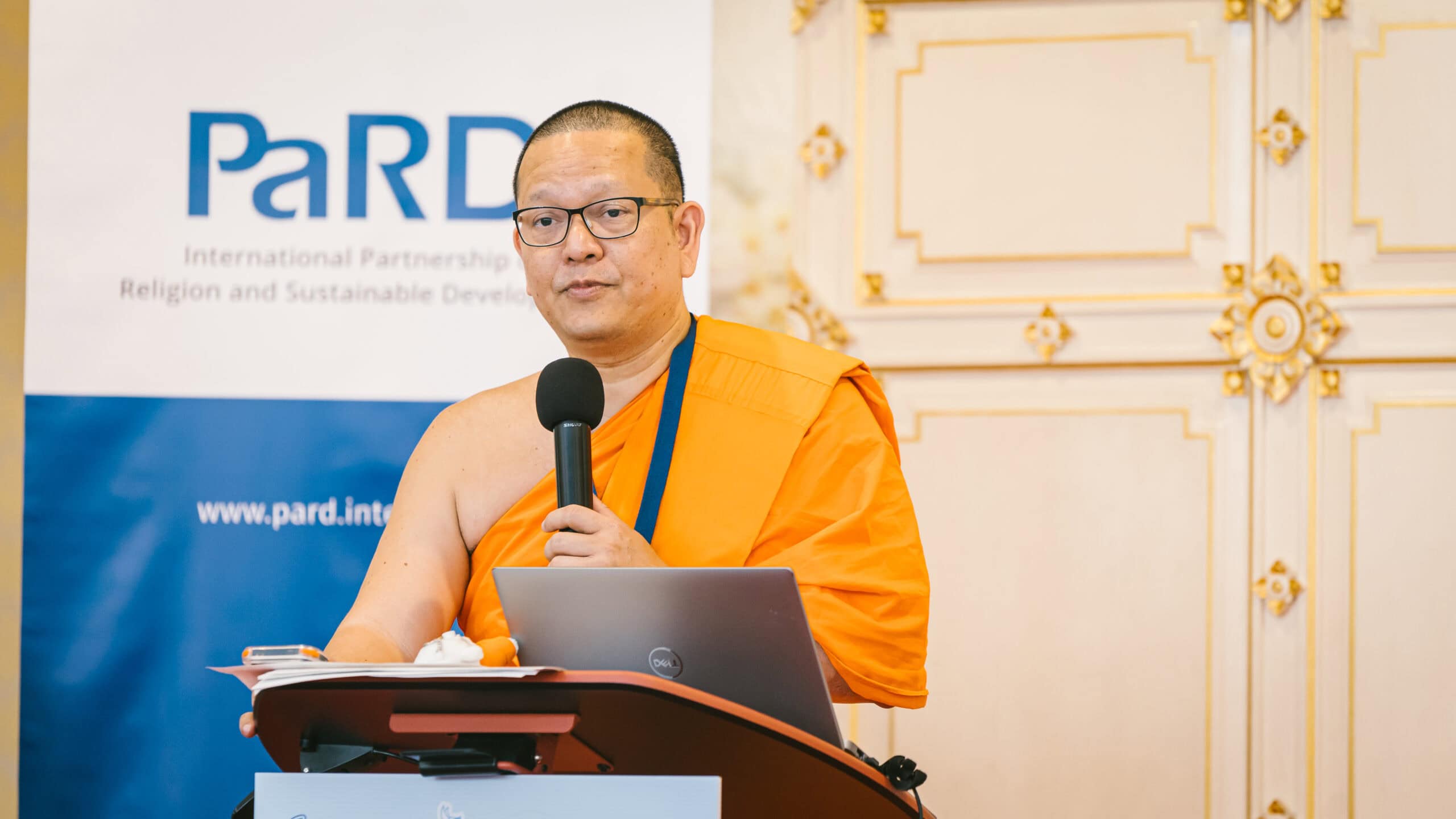
Professor Cesare Zucconi, representing the Community of Sant’Egidio, shared insights at the PaRD Annual Forum on the role of dialogue, solidarity, and interreligious cooperation in building lasting peace across conflict-affected regions.

Dear friends,
Thank you for inviting me to speak with you today on behalf of the Community of Sant’Egidio. For more than five decades, our community has been walking a path of friendship, dialogue, and service. We have been guided by a conviction, that peace is not simply the absence of war, but the patient construction of relationships, of trust, and of shared humanity.
We live in a time marked by fractures and violence. Conflicts, both forgotten and visible, scar our world from Ukraine to Africa, from the Middle East to many other regions. At the same time, our societies face new walls of fear, polarisation, and indifference. Pope Leo recently spoke of “a globalization of powerlessness”, and the feeling of powerlessness quickly leads to indifference. In such a time, the cry for peace is urgent. Yet peace cannot be imposed from above; it must be built, patiently, from below — in the daily encounters between peoples, traditions, and religions.
This is why the Community of Sant’Egidio has always believed that religions are not destined to clash. On the contrary, when they remain faithful to their deepest roots, they are a force for reconciliation. Prayer, compassion, the dignity of every human person — these are shared treasures, not exclusive possessions.
Allow me to recall the great gathering of Assisi in 1986, when Pope John Paul II invited leaders of world religions to pray for peace. That day marked the beginning of a journey. Sant’Egidio has tried, year after year, to continue that “Spirit of Assisi”. We have seen how dialogue can overcome suspicion, how prayer can disarm hearts, freeing religious worlds from self-referentiality and helping them to clearly distance themselves from violence and war and how the encounter of believers can inspire political leaders to choose negotiation instead of war. It is a fact that today there is more dialogue between religious worlds than between political worlds. The Meeting this year will be in Rome, at the end of October, with the participation of Pope Leo. These meetings have borne much fruit over the years, through many critical phases in history. I am thinking of relations with the Islamic world after the terrorist attacks of September 11, 2001. Continuing the path of dialogue, despite the many criticisms we have been subjected to, led to the signing of the declaration on “Human Fraternity for World Peace and Living Together” between Grand Imam El Tayyeb, a regular attendee at our meetings, and Pope Francis. Something that would have been unthinkable just a few years earlier. Many of Sant’Egidio’s peace initiatives stem from these meetings in the “Spirit of Assisi”, which will celebrate their 40th anniversary next year. These meetings are not a Davos of religions, but involve the participation of thousands of ordinary citizens, including many young people, because peace, as John Paul II said at the end of the day in Assisi, concerns us all and not just the specialists.
Friends, peace is always possible. We know this not as a theory, but as lived experience. In the 1990s, Sant’Egidio had the privilege of conducting and delivering the long and difficult negotiations that brought an end to more than 16 years of civil war in Mozambique. We were not diplomats. We had no armies or economic power. What we had was trust: trust from both sides, trust nourished by listening, by hospitality, and by the conviction that no conflict is without a solution. That peace agreement, signed in Rome in 1992, has been held for more than thirty years. It is a sign that even the most entrenched violence can be overcome, even though today we are concerned about certain developments in northern Mozambique. I could tell you about the positive developments in the Central African Republic, thanks in part to the years of work carried out by Sant’Egidio and many other initiatives, but there is no time.
Today, the world needs similar signs of hope. It is too easy to fall into cynicism, to believe that conflict is inevitable, that religions will always divide. But our experience says otherwise. When believers come together, not to erase differences but to respect them, when they pray side by side and stand up for the poor and the excluded, they proclaim to the world that peace is not a dream — it is a responsibility.
This responsibility is also ours as citizens. Peace is not only negotiated at high-level conferences; it is woven every day in the fabric of our cities. In Rome, where Sant’Egidio was born, we meet the faces of refugees, migrants, the elderly, the homeless, people who carry the wounds of loneliness and rejection. By welcoming them, we build a culture of peace. By giving a name, a story, a friendship to those who are often invisible, we resist the violence of indifference.
Religions, when they embrace their vocation to compassion, remind us that every person — whatever their faith, ethnicity, or status — is a brother or a sister. This simple truth is revolutionary. It is stronger than the logic of profit or the culture of exclusion. It is a truth that can guide politics, heal societies, and inspire the younger generations to live not in fear but in hope.
I believe that international cooperation and humanitarian aid also play an important role in peacemaking, and I view with concern the decision of many countries to eliminate or reduce spending on international cooperation for ideological reasons or because the budget is increasingly devoted to rearmament. This is madness, for at least two reasons: reducing spending on cooperation means laying the foundations for a world where inequality and a lack of prospects for millions of young people will be fertile ground for new conflicts and difficulties. And then — let’s be clear (and history teaches us this) — rearming means preparing for war, even if we always say that it is others who want war.
In conclusion—and I apologize for taking a little longer than expected — I would like to mention the example of the Sant’Egidio communities in Ukraine. Sant’Egidio has been present in the country since 1991. Our response to the war has been solidarity, right from the first day of the war. Our communities have not succumbed to nationalist sentiment or enemy rhetoric, unlike, unfortunately, some churches in that region. Before the war, we prayed for peace, while many other churches prayed for victory. Our friends in Ukraine have understood that solidarity (and they help thousands and thousands of displaced people, even though they themselves are largely displaced) is a form of resistance to Russian aggression. Thousands of Ukrainians in these more than 3 years of war have joined our communities, finding in solidarity a way to react to the war and find hope in the future, not closing themselves off in victimhood (even though they are victims), but reacting positively.
Sant’Egidio is convinced that the future cannot be built by erecting walls, but by opening doors. We must open doors between peoples and between religions, build bridges. We must open doors to those who flee war and poverty.
Thank you