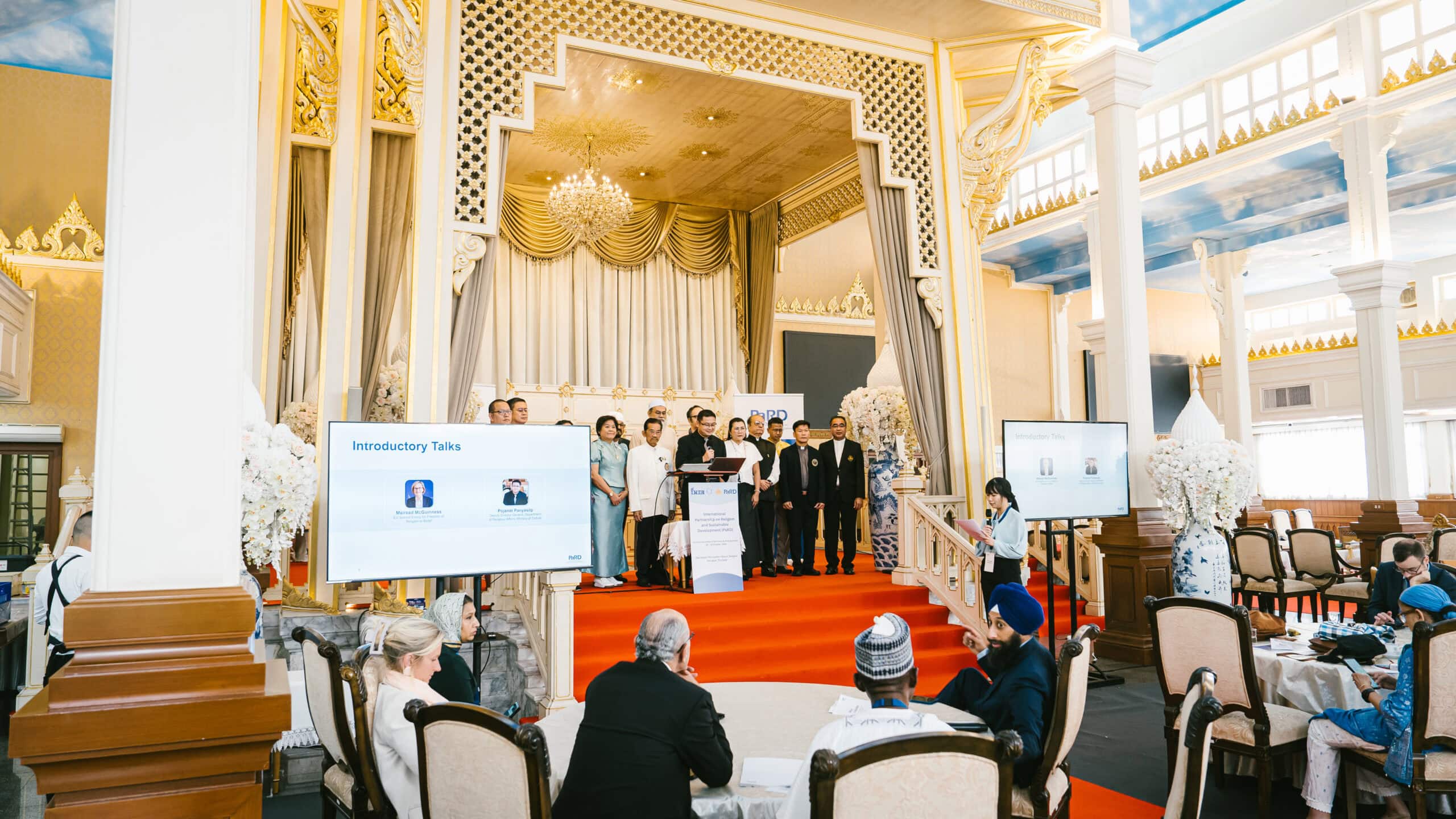
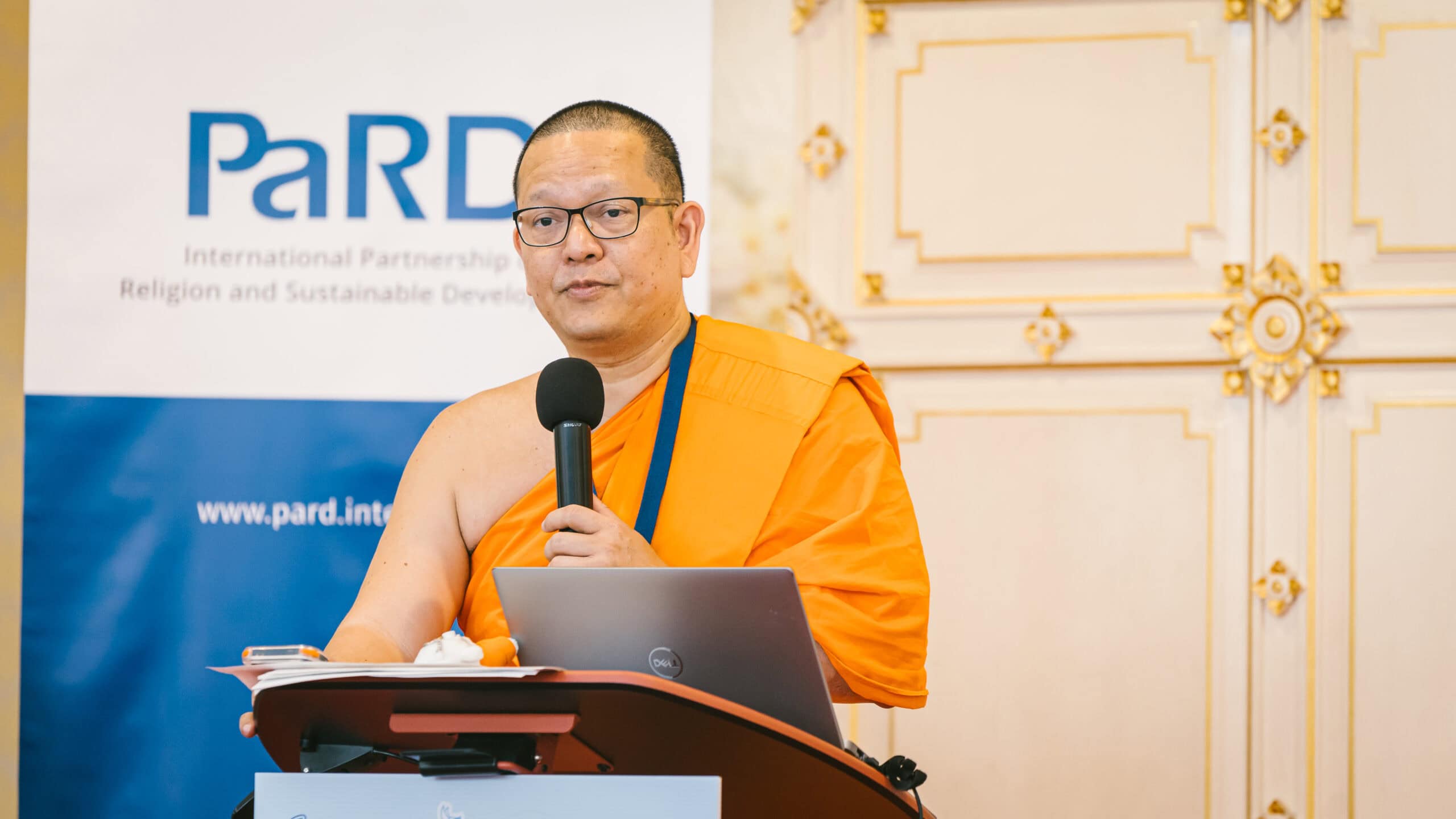
In his address, Diplomat Luca Fratini highlighted the urgent need to strengthen the role of women, youth, and faith actors in peacebuilding and mediation, emphasizing inclusivity as a cornerstone of sustainable peace.

Distinguished Colleagues,
Ladies and Gentlemen,
It is a pleasure and an honour to address on a complex, urgent and promising topic: the role of women and youth, alongside faith actors, in peacebuilding and mediation. At a moment when the international system faces unprecedented strain, one question emerges: how to ensure that their participation becomes structural, meaningful, and transformative.
We gather today in a time marked by deep fractures. According to the Global Peace Index 2025, there are currently fifty-six active armed conflicts worldwide—the highest number since the end of the Second World War. Multilateral institutions, traditionally considered as a key-structural and operational cornerstone for global collective security, are experiencing a crisis of legitimacy and functionality. The UN Security Council itself is often paralyzed by political division, leaving mediation efforts fragmented and under-resourced. In such a turbulent landscape, the need to reinvent the grammar of diplomacy and to expand the ecosystem of mediators has never been more pressing.
Women and Youth as Central Peace Actors
Women and youth are historically defined as vulnerable categories of right-holders, yet they represent both the population majority in many conflict-affected societies and the majority of its victims. They are disproportionately exposed to displacement, insecurity, sexual and gender-based violence, and exclusion from every decision-making process. Yet, they are also the constituencies most deeply invested in peace, resilience, and economic and social post-conflict reconstruction.
The Women, Peace and Security (WPS) Agenda, inaugurated by UNSCR 1325 (2000), and the Youth, Peace and Security (YPS) Agenda, launched by UNSCR 2250 (2015), have redefined international peace and security frameworks. While they originated from distinct imperatives—the marginalization of women in peace processes, the securitization of youth in counterterrorism narratives—their trajectories have converged. Both agendas insist on one central truth: peace efforts cannot be sustained when half of humanity is excluded from their design and implementation.
Italy has long been at the forefront of advancing principles falling behind these Agendas. In August 2025, we adopted our Fifth National Action Plan on WPS, strengthening monitoring and accountability mechanisms and reaffirming our pioneering role.
By the end of this year, Italy will launch its first National Action Plan on YPS—becoming the second country in Europe and among the first ten globally to do so. As an example of good practice, this Plan has been drafted through a participatory methodology under the coordination of the Ministry of Foreign Affairs and International Cooperation, in synergy with the Ministry for Sport and Youth, civil society organizations, and academia. Most importantly, young people
themselves have co-authored the operational measures, demonstrating that meaningful participation is more than a slogan, it can become a concrete practice.
These experiences show that when women and youth are integrated into peace processes at large, the outcomes are more inclusive and, furthermore, more legitimate, resilient, and sustainable.
Faith Actors and the Power of Interfaith Dialogue
Yet inclusivity in mediation must go beyond demographic categories. It must also address identity in its deepest dimensions — cultural, spiritual, and religious. In conflicts where religion constitutes an element of identity, secular mediators often face what has been described as a cultural empathy gap. Even when impartial, independent, and neutral, they may be perceived as outsiders, hence unable to fully grasp the symbolic and spiritual dimensions of conflict and reconciliation.
This is where faith actors play an indispensable role. Faith leaders and institutions often hold unique legitimacy, moral authority, and access to communities in ways that governments or international organizations cannot replicate. Their engagement can transform peacebuilding from a technical exercise into a process of symbolic healing, restoring dignity and trust.
Interreligious dialogue, in particular, emerges as a critical tool for creating safe spaces for bridge-building. These spaces are shrinking under the pressures of polarization, disinformation, and the securitization of identity politics. Yet where they do exist, they allow adversaries to recognize each other as persons bound by shared values and aspirations. Italy has consistently invested in this dimension of peacebuilding, drawing upon its cultural heritage, geographic position in the Mediterranean, and long-standing commitment to intercultural and interfaith dialogue.
Building an Expanded Ecosystem of Mediation
The implication is clear: the future of peace mediation requires a broader ecosystem of actors. The days when international diplomacy relied solely on the figure of a single “grand mediator” dispatched by the United Nations are fading. Today, peace processes are increasingly populated by a diverse constellation of mediators — States, regional organizations, civil society representatives, women’s networks, youth movements, and faith actors.
Italy’s recent launch, last September, of the Italian Network for International Mediation (RIMI) embodies this vision. RIMI aims to harness Italy’s ability to convene diverse actors, institutions, and contexts by virtue of Italy’s cultural heritage, diplomatic tradition, and geographic position. The network’s objectives include training the next generation of mediators, with particular emphasis on women and youth, and building specialized expertise in cultural and humanitarian mediation. Through initiatives like RIMI, Italy seeks not only to participate in mediation but also to facilitate forms of dialogue that inspire trust and inclusion.
After 30+ years of service, I honestly feel there is an urgent need to reshape the instruments of diplomacy. Traditional approaches—state-centric, elite-driven, and technocratic—are insufficient to confront the layered crises of the twenty-first century. Mediation today must
be understood as the art of building relationships, not merely negotiating agreements. It requires trust, inclusivity, and sensitivity to the cultural and spiritual dimensions of identity.
In this landscape, women, youth, and faith actors are all essential pillars. Their inclusion and factual contribution are a strategic necessity. They embody the transformative potential needed to revitalize multilateralism, to reopen safe spaces for dialogue, and to reconstruct in the effectiveness of international peacebuilding.
The WPS and YPS Agendas have taught us that peace is not sustainable without the active participation of those historically excluded. Interreligious dialogue has shown us that reconciliation requires symbolic as well as political solutions.
The path forward, therefore, is to build on these insights — not as parallel efforts, but as integrated and mutually reinforcing strategies. By embedding women, youth, and faith actors into the very fabric of peacebuilding, we can not only adapt diplomacy to contemporary realities but also restore its credibility, effectiveness, and humanity.
Without dialogue, there is no peace. Without trust, there is no mediation. And without inclusivity, there can be no legitimacy.
Thank you.